
Benefits Verification Discrepancy Log: Keep Conflicting Answers Visible
A free behavioral-health benefits discrepancy log with source comparison, exact verification questions, review states, a fictional example, and a clear handoff.
Direct answer
Benefits verification discrepancy log: what operators need to know
A free behavioral-health benefits discrepancy log with source comparison, exact verification questions, review states, a fictional example, and a clear handoff. Retain conflicting sources instead of overwriting the older answer. Check whether both answers concern the same arrangement and service period.
20 minutes · Your payers and levels of care · No patient information needed
See the workflow: Verification-of-benefits workflow.
On this page: Direct answer
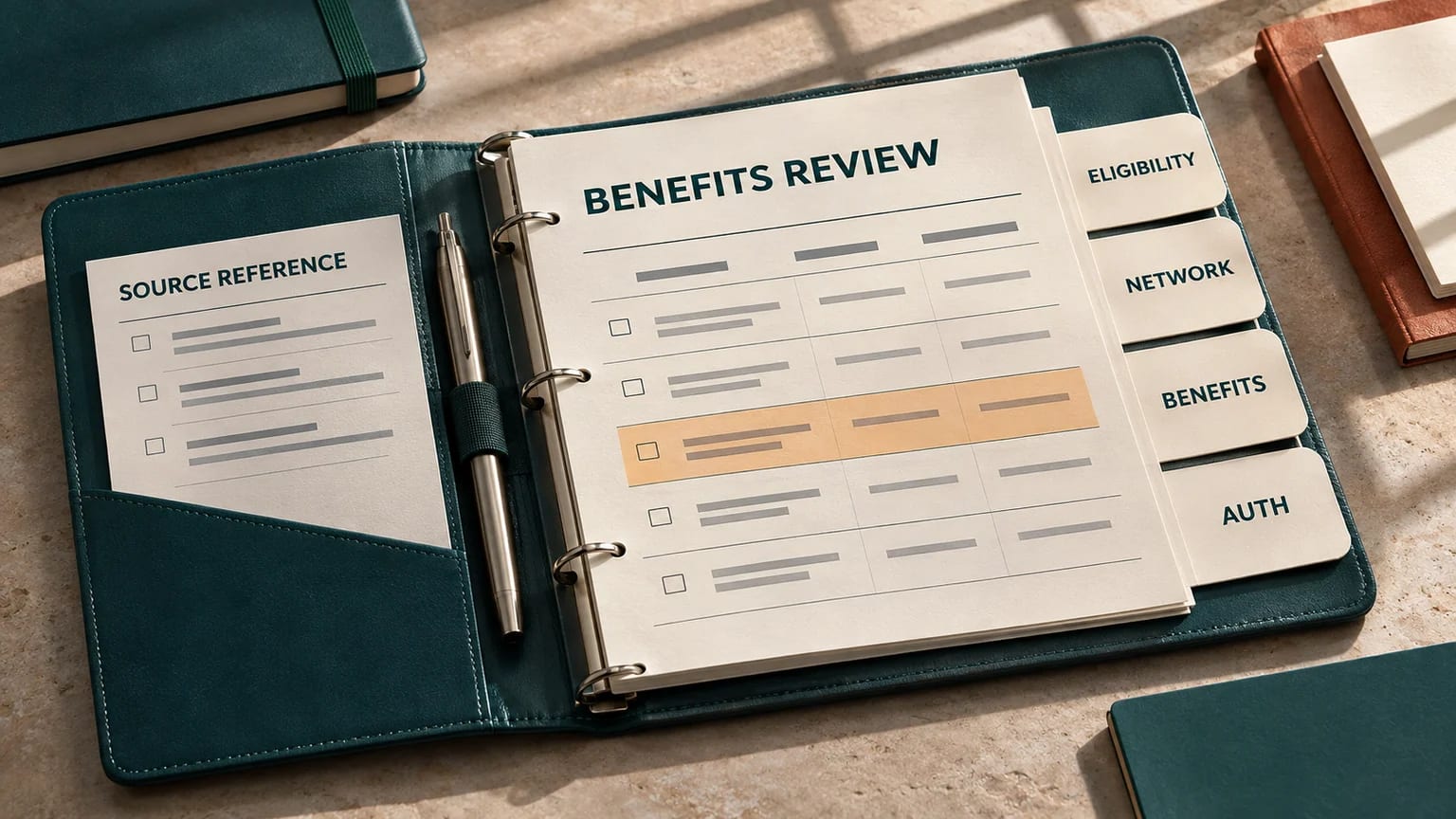
When benefit sources disagree, retain both answers, identify the exact difference, and assign the narrow question that would resolve it. Compare arrangement, service, level of care, network context, effective period, and checked time before deciding that two sources contradict each other. Active eligibility is one fact; it does not by itself settle every service-level coverage or payment question.
The free discrepancy log below structures that work without collecting patient information. Real eligibility responses, benefit records, identifiers, and clinical details stay inside approved systems. The example uses fictional source labels and questions. Your authorized team verifies the actual arrangement and determines the appropriate clinical, financial, and operational next action. A public checklist does not establish coverage, patient responsibility, or payment.
Key takeaways
The short version
- Retain conflicting sources instead of overwriting the older answer.
- Check whether both answers concern the same arrangement and service period.
- Separate confirmed eligibility from unresolved benefit questions.
- A call reference documents a contact; retain the actual question and answer too.
- The receiving team needs the limitation and next action, not a vague cleared label.
Take the template with you
Free to copy · no email required
Benefits discrepancy log
Process-level template. Use secure internal references for actual responses and case information.
Discrepancy reference,Question,Source A reference,Source A scope and checked date,Source B reference,Source B scope and checked date,Exact difference,Confirmed facts,Unresolved item,Verification owner,Next question,Reviewed answer reference,Downstream handoff,Recheck trigger
DEMO-VOB1,Service-level benefit,Secure source A,Confirm scope,Secure source B,Confirm scope,Answers may describe different services,Eligibility status only,Applicable service benefit,Named owner,Confirm arrangement service and period,,,Plan or service change
Saves as benefits-verification-discrepancy-log.csv
Try the workflow · fictional demo case
Are these answers actually about the same benefit?
A fictional eligibility response is active. A later contact gives a benefit answer, but the service and network context were not recorded.
Select a check to reveal the finding and next action. Nothing is sent to a payer.
0 of 3 checks reviewed. A named person still approves the next action.
This fictional example illustrates an offered Marsa workflow. We do not connect this public example to a payer or present it as a customer result. We measure demo starts and completions using fixed labels; no input text is collected.
Explore authorization, appeals, benefits, claims, audit, and coordination automations1. Write the difference as a question
Start with the specific issue rather than a conclusion that the payer gave the wrong answer. One source may show eligibility while another describes a benefit, network participation, authorization requirement, or estimate. Write what the team needs to know: which service-level benefit applies to this arrangement and period? That question directs the next verification action more effectively than insurance information conflicting.
Keep the operating summary free of unnecessary clinical narrative. A secure case reference, discrepancy category, source references, owner, and next action can be enough for a work queue. Authorized staff can reach the underlying record when needed. The public worksheet is a structure for that workflow, not a place to paste an actual eligibility response or a patient's circumstances.
Distinguish the consequence the question affects. An unresolved network answer may affect a financial estimate; a missing authorization requirement may affect the preparation workflow; a date mismatch may require another eligibility check. The verification owner should understand the decision being supported while leaving clinical and coverage judgments with the appropriate qualified people. A clear question prevents the same vague inquiry from being repeated by several departments.
2. Compare arrangement, service, and time before comparing answers
For each source, record the payer arrangement and product context where relevant, behavioral-health administrator, service or level of care, network context, period addressed, and checked time. A familiar brand does not guarantee the same arrangement. A response about current eligibility may not answer a question about an earlier service period. A benefit summary for one level of care may not settle the question for another.
The checked date and effective period are different fields. Checked today means someone retrieved or confirmed the information today. It does not establish that the information applies to every date or that it will remain unchanged. Keep both concepts visible. When a plan, service, location, provider arrangement, or other relevant fact changes, the organization should know which verification questions need to be revisited under its approved process.
If the sources describe different scopes, preserve that finding rather than forcing a contradiction. The next action may be to obtain an answer for the missing scope. A discrepancy log is useful even when it discovers that both sources can be correct. It documents what each source establishes and prevents the receiving team from using a narrower answer as a broader clearance decision.
3. Retain the source and its limitation
Store actual responses and supporting evidence in the approved system. The log should point authorized reviewers to them and identify the relevant section or transaction context. A copied value without a source can become difficult to challenge or update. A long pasted response can create an uncontrolled duplicate record. Use a concise operating summary with a dependable secure reference instead.
CMS's Medicare HETS companion guidance explicitly separates an eligibility response from a guarantee of payment. That is a Medicare-specific source, not a commercial-plan rulebook. The operating lesson for this template is to keep the fact a response establishes separate from the broader conclusion a staff member might want to draw. The actual arrangement still needs its own applicable source and review.
Record uncertainty as a first-class state. Source unavailable, scope unclear, sources conflict, and answer awaiting qualified review are useful categories when each has an owner and next action. Replacing an unknown with a likely value can make the record look complete while making the handoff less reliable. The team should be able to explain what is confirmed and what still needs verification without reading between the lines.
4. Ask the narrowest question that resolves the gap
Prepare the question before contacting the approved source. State the arrangement and service context the authorized workflow permits, identify the difference, and ask what fact would resolve it. For a fictional case: does this answer concern the specified service level and network context for the relevant period, or only general eligibility? The question should be precise enough that the owner can tell whether the response actually answered it.
Retain the answer's scope and limitation along with any call or transaction reference. A reference number establishes a way to locate a contact; it does not summarize what was asked or prove a broader interpretation. Record the question, response, checked time, relevant source, and unresolved issue. Where a verbal answer conflicts with written instructions or another source, preserve the conflict and route it for appropriate review.
Do not turn a reassurance into a guarantee. If the representative answers only one part of the question, keep the remaining part open. If the source cannot clarify the applicable arrangement, assign the next verification route. The organization may need a qualified operational, contracting, financial, clinical, or legal reviewer depending on the issue. The log keeps the work explicit without assigning authority to the spreadsheet itself.
5. Work through a fictional active-eligibility discrepancy
Harbor Example receives source A showing active eligibility. Source B is an internal note saying the service is covered, but the note omits the service level, network context, period, and question asked. The coordinator opens a discrepancy rather than replacing source A with a cleared status. Confirmed eligibility stays recorded, while the service-level benefit question receives a named verification owner.
The owner retrieves the secure source behind the note or obtains clarification through the approved channel. The question asks whether the answer applies to the intended service and arrangement. If the response establishes a narrower fact, the summary reflects that fact. If the relevant question remains unanswered, the next action stays open. The example does not supply a real benefit, estimate, authorization requirement, or patient responsibility.
The receiving team gets a concise reviewed handoff: confirmed facts, unresolved questions, source references, checked date, owner, and recheck trigger. A separate qualified process determines any estimate or next operational decision. The value of the log is that the team can see the limitation instead of discovering later that active or covered meant different things to different people.
| Fictional source | Established fact | Missing scope | Next action |
|---|---|---|---|
| Source A eligibility response | Active status as represented by that source | Service-specific benefit conclusion | Retain source and verify relevant period |
| Source B internal note | A contact or summary occurred | Question, service, network, and period | Locate underlying answer or ask a precise follow-up |
| Reviewed handoff | Confirmed facts with limitations | Any unresolved benefit question remains open | Assign owner and recheck trigger |
6. Keep estimates and coverage conclusions distinct
An estimate depends on inputs and assumptions. The discrepancy log should identify which relevant inputs are confirmed and which remain unresolved, so the authorized financial reviewer can decide how to proceed under the organization's policy. Do not present a numerical estimate as final patient responsibility merely because the spreadsheet can calculate it. The applicable plan terms, service facts, and later claim processing may affect the actual result.
Show the checked date, basis, and limitation wherever the estimate is used in an approved workflow. If a relevant input changes, identify the dependent estimate and handoff that need review. A corrected benefit value in one system does not automatically update every message or worksheet that relied on the earlier value. Assign the reconciliation action and record acceptance where the change matters.
Keep the public demonstration separate from real financial clearance. The fixed example on this page does not request a person's information or calculate an actual obligation. It shows how a missing question becomes an owner and next action. Your implementation should establish the appropriate source systems, disclosure process, review roles, and communication standard for estimates used with real people.
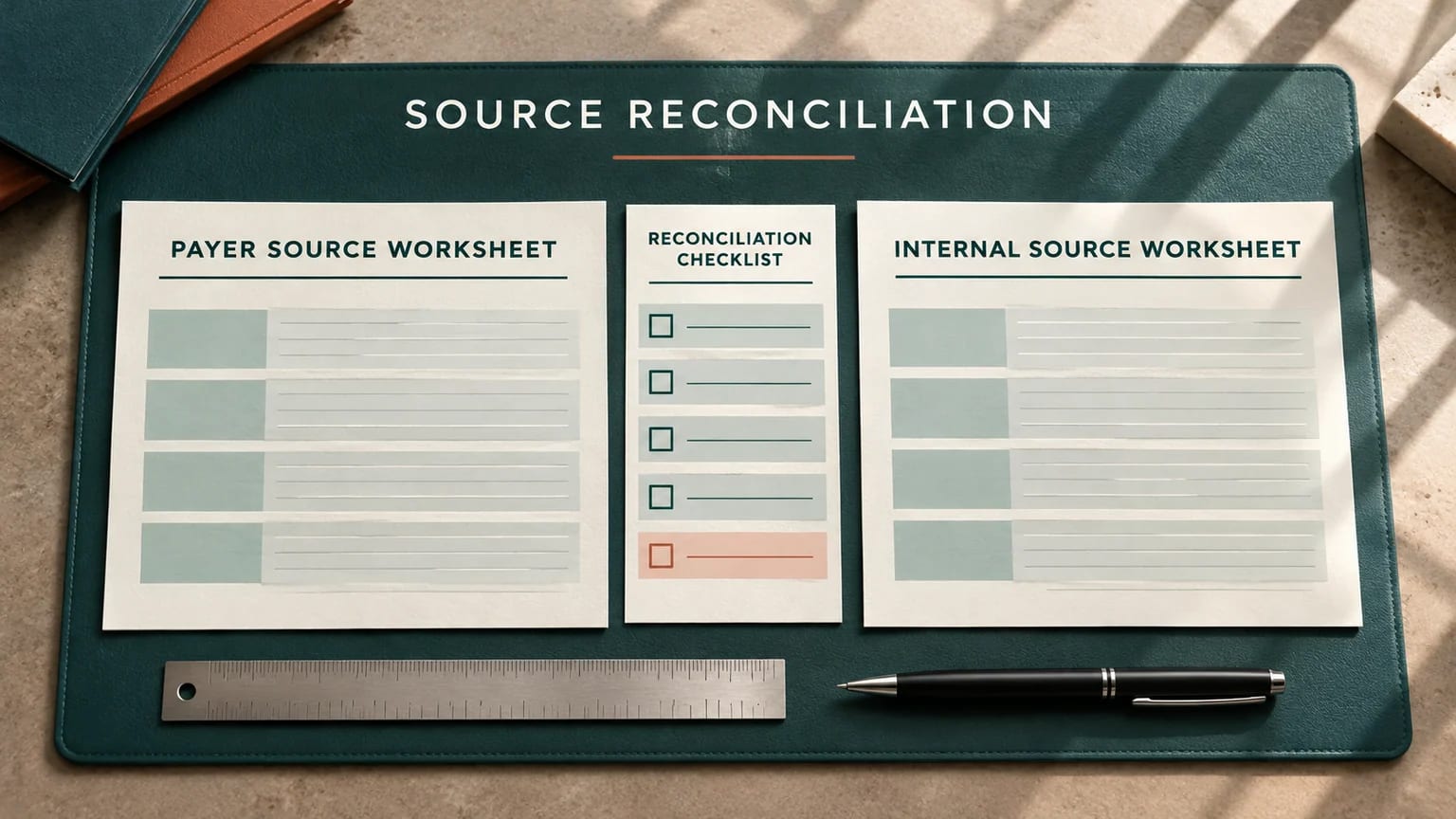
7. Transfer the uncertainty with the work
A useful handoff says what is confirmed, what is not, which sources support each statement, and who owns the next action. Avoid an unexplained verified flag. The receiver should be able to distinguish eligibility, benefit scope, network, authorization, and estimate questions as relevant to the case. They do not need every possible field on every handoff; they need the facts and limitations that affect their next decision.
Require acceptance when another team must act. A shared inbox notification may establish that a message was sent without establishing who will verify the unresolved issue. The receiving owner should know the question, secure evidence location, internal review point, and escalation route. If the primary owner will be absent, the backup needs the same access and definitions rather than a separate personal summary.
When an answer changes, preserve the earlier source and explain the update. This makes it possible to reconstruct what the receiving team knew at the time. Do not silently rewrite a historical handoff to match today's answer. The record should show the change, reviewer, and dependent actions, so staff can identify whether any estimate, preparation step, or communication needs to be reconciled.
8. Define recheck triggers the team can maintain
Choose triggers that reflect your workflow and applicable requirements: a changed arrangement, service level, network context, period, location, provider relationship, conflicting response, or another relevant event. A universal check-everything-every-day rule may be difficult to maintain and still miss a material change. The organization should define the triggers, owner, and source for the verification it actually relies on.
At each recheck, record what question was reviewed and whether the scope changed. A new checked date should not imply that every field was reverified if the owner only resolved one discrepancy. Keep partial review explicit. This prevents the report from looking fresher than the underlying evidence and helps a backup decide which source is appropriate for the next action.
Retire outdated process guidance with a visible history rather than deleting the earlier rule silently. A payer matrix can hold reusable instructions and sources, while the case log retains its specific answers and events. Link the two through approved references where useful. Keep the distinction between reusable process knowledge and a case-specific verification result clear enough for the receiving team to follow.
9. Review discrepancy quality, not just clearance speed
Measure unresolved questions, time to an accepted verification action, source completeness, repeated scope gaps, and downstream updates awaiting acknowledgment. Use denominators and stable definitions. A cleared count can hide unsupported assumptions if staff are rewarded only for closing rows quickly. Allow visible unknowns and inspect whether the recorded answers actually support the status assigned.
Sample cases that appeared to resolve unusually quickly and those that required repeated contacts. Ask whether the first question was precise, sources matched scope, the answer was retained, and the receiving team understood the limitation. Those checks can identify a missing field or weak handoff. They do not establish that every discrepancy is avoidable or that a particular tool guarantees payment.
Marsa offers eligibility, benefits, coverage-discovery, estimate, discrepancy, and coordination workflows alongside authorization and denial automation. The free log and fictional walkthrough make the operating method inspectable. A named reviewer approves the relevant summary and payer action. Use the worksheet independently or request a walkthrough of the offered workflow, keeping actual member information and source records out of public forms.
10. Test two answers that can both be correct
Use a fictional source A that answers a current eligibility question and a source B that describes a service benefit for a different period. Ask a backup to compare them without telling them which source is newer. The expected result is a scope distinction and a precise follow-up question. Replacing source A with source B would lose useful information, while calling the sources contradictory would also overstate the evidence.
Then supply the missing period context and ask the backup to update the operating summary. They should preserve the earlier sources, identify which question is now answered, and leave any separate network or authorization issue open. The exercise helps the team practice partial resolution. A discrepancy can be narrower after review without the entire case becoming cleared. Record the reviewed fact and its limitation so the receiving team does not infer that every related coverage question was resolved at the same time.
Common questions
Answers before you build.
Does active eligibility prove the service will be paid?
Do not extend an eligibility fact into a blanket payment conclusion. Verify the relevant service, arrangement, conditions, and source scope through the approved process.
Should the newest answer replace the earlier one?
Preserve both and compare their scope and period. Record the reviewed update and any dependent action rather than silently overwriting history.
What should the receiving team see?
Confirmed facts, unresolved questions, secure source references, checked date, owner, next action, and recheck trigger relevant to its decision.
Practical closeout
Use this operator checklist.
- Retain conflicting sources instead of overwriting the older answer.
- Check whether both answers concern the same arrangement and service period.
- Separate confirmed eligibility from unresolved benefit questions.
- A call reference documents a contact; retain the actual question and answer too.
- The receiving team needs the limitation and next action, not a vague cleared label.
Continue through the cluster
Verified customer case studies are added only with customer permission and supporting evidence; none is implied by these operational examples.
Sources & methodology
Trace the operational claims.
Marsa Health Editorial reviewed the primary and research sources below on November 4, 2026. We translate them into workflow controls, distinguish proposals from final rules, and flag where plan, program, state, contract, or clinical requirements vary.
- 01HETS270/271 Companion Guide CMSMedicare-specific eligibility guidance, including limits of an eligibility response. The commercial workflow and fictional log are editorial recommendations, not a commercial-plan rule.Accessed or rechecked November 4, 2026
- 02HIPAA Eligibility Transaction System CMSPrimary description of Medicare HETS; verify the actual source and arrangement used by your organization.Accessed or rechecked November 4, 2026
- 03Health Plan Eligibility Benefit Inquiry and Response Centers for Medicare & Medicaid ServicesOfficial overview of the HIPAA-adopted X12 270/271 eligibility and benefit transaction.Accessed or rechecked November 4, 2026
- 04Know what your insurance covers Substance Abuse and Mental Health Services AdministrationConsumer-facing overview of behavioral health insurance coverage questions and plan variation.Accessed or rechecked November 4, 2026
- 05Minimum Necessary Requirement U.S. Department of Health and Human ServicesHIPAA guidance on limiting uses, disclosures, and requests for protected health information when the standard applies.Accessed or rechecked November 4, 2026
Organizational author. Editorial review covers source accuracy, search intent, workflow boundaries, and human-oversight requirements. This material is educational and does not provide clinical, legal, coding, or coverage advice.
No named clinical or legal expert reviewer is attributed to this version. Marsa Health does not invent reviewer credentials.
Read our editorial methodRevision history
What changed and when
November 4, 2026
Initial publication, source review, and operational editing.