
CareLogic and Payer Operations: Improve the Workflow Without Losing the Clinical Record
A behavioral-health operating model for evaluating CareLogic alongside payer-work automation, with a free system-of-record map and fictional handoff tests.
Direct answer
CareLogic payer operations workflow: what operators need to know
A behavioral-health operating model for evaluating CareLogic alongside payer-work automation, with a free system-of-record map and fictional handoff tests. An EHR decision and a payer-work decision can have different scopes. Keep the clinical source, case ownership, payer evidence, and financial event clearly assigned.
20 minutes · Your payers and levels of care · No patient information needed
See the workflow: Marsa Health platform overview.
On this page: Direct answer
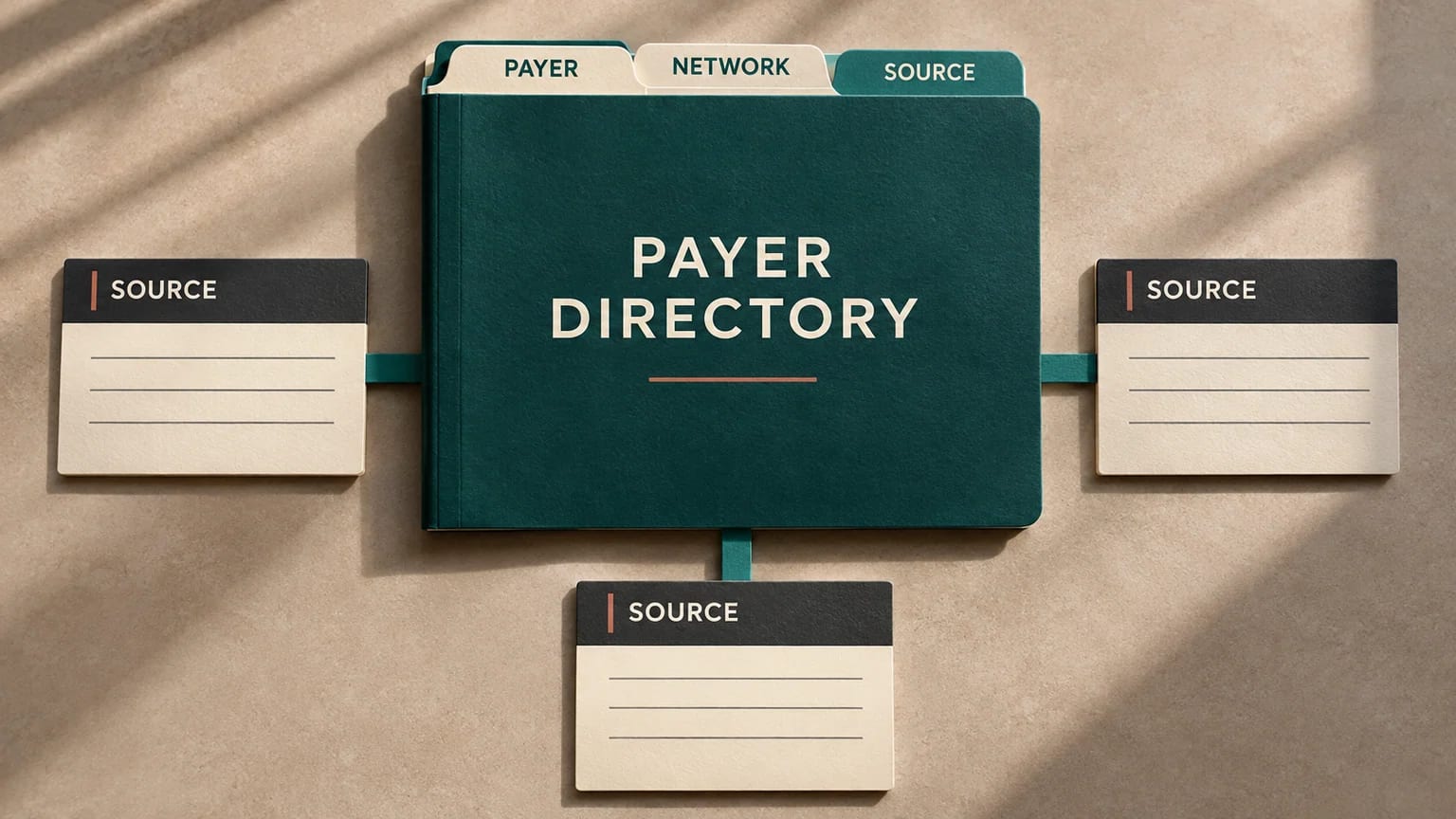
CareLogic and a payer-operations workspace should be evaluated according to the responsibilities each will hold. Your clinical record, scheduling, documentation, billing, payer evidence, and internal next actions need a dependable operating model. Start by identifying the handoff that fails today, then decide whether the current EHR configuration, a process change, an integration, or another workflow is the appropriate remedy.
Marsa Health wrote this article from official Qualifacts materials and an original system-of-record framework. We have not tested your CareLogic configuration or established a live Marsa connection to it. Marsa is a behavioral-health payer-operations workspace with offered automation across the payer-work lifecycle. The public demonstration is fictional, and implementation confirms the specific systems, connections, and operating responsibilities.
Key takeaways
The short version
- An EHR decision and a payer-work decision can have different scopes.
- Keep the clinical source, case ownership, payer evidence, and financial event clearly assigned.
- A FHIR endpoint does not prove a specific authorization write-back workflow.
- Test corrections and receiving-team acknowledgment before choosing an integration design.
Take the template with you
Free to copy · no email required
EHR and payer-work source-of-record map
Assign each fact and event to its authoritative source, receiving system, and correction owner.
Fact or event,Authoritative source,Receiving workflow,Permitted transfer,Review owner,Correction path,Downstream acknowledgment
Clinical documentation,,,,,,
Payer decision,,,,,,
Internal next action,,,,,,
Approved packet version,,,,,,
Payment reconciliation,,,,,,
Saves as ehr-payer-work-source-map.csv
Try the workflow · fictional demo case
A revised payer decision crosses the EHR boundary
A fictional organization keeps its clinical record in the EHR and coordinates a payer response in a separate work queue. A decision changes after an earlier summary was used.
Select a check to reveal the finding and next action. Nothing is sent to a payer.
0 of 3 checks reviewed. A named person still approves the next action.
This fictional example illustrates an offered Marsa workflow. We do not connect this public example to a payer or present it as a customer result. We measure demo starts and completions using fixed labels; no input text is collected.
Explore authorization, appeals, benefits, claims, audit, and coordination automations1. Identify the decision you are actually making
A team frustrated by a payer handoff may jump straight to replacing an EHR. First describe the concrete failure. Perhaps the clinical record is available, but no one owns the missing-information response. Perhaps an amended payer decision never reaches the billing owner. Perhaps staff rebuild an evidence index in several spreadsheets. Each problem can have a different remedy, and none by itself proves that the clinical system should be replaced.
Qualifacts describes CareLogic as a behavioral-health and human-services EHR covering clinical, administrative, and financial workflows. Treat the proposed configuration fairly. Ask what is already available, what requires configuration or another service, and what remains outside the current contract. A product page's scope does not establish your organization's implementation, but an omitted feature on a marketing page is also not proof that the capability is absent.
Write the evaluation question in one sentence: we want a reviewed payer decision to reach the billing owner with its source and next action intact. That sentence gives both your existing vendor and any proposed addition a practical test. It also helps avoid paying for a broad replacement when the organization mainly needs a stronger handoff or an explicit operating responsibility.
2. Give every material fact an authoritative source
Use the free map to identify which system establishes each fact. The clinical record may establish documented care; a payer decision establishes the terms represented in that source; a work queue establishes the internal owner and next action; the financial system establishes the organization's recorded payment and reconciliation. Your actual architecture may differ. The point is to assign authority explicitly rather than let the newest copied value become the truth by accident.
For each copied or transferred field, record its source, receiving workflow, permitted transfer, review owner, and correction route. A useful map includes events as well as static values. A review approval, a transmission attempt, a receipt, and a later decision should remain distinguishable. When an event changes the next action, the receiver needs enough context to understand what happened and which source supports it.
Avoid creating an uncontrolled second clinical record inside a general coordination tool. The appropriate design depends on the approved data scope and qualified review. At a process level, a secure source reference and concise operating question may be sufficient for some handoffs. HHS minimum-necessary guidance has defined scope and exceptions; the organization's qualified owners should establish the actual data-handling arrangement rather than infer permission from a public workflow template.
3. Map the handoff before choosing the connection
For the fictional organization, a reviewer needs to prepare a response to a payer request while the clinical record remains in the EHR. Draw the sequence: request received, requested items indexed, evidence located, gap assigned, packet prepared, named reviewer approves, approved action occurs, and follow-up receives an owner. Mark where each event lives and who accepts the next responsibility.
Then identify the smallest transfer needed at each boundary. The receiver may need a secure reference, a reviewed summary, a current version, or a structured status. Those are different requirements. A broad instruction to integrate the systems does not tell an engineer which field is authoritative or an operator what to do when the transfer fails. The map should describe the operating outcome before the team chooses an interface.
Rehearse the map using synthetic records and a receiving staff member. Ask that person to locate the question and source without the sender explaining the history aloud. If they cannot, improve the handoff before automating it. An integration can transmit an ambiguous field perfectly and still leave the receiver uncertain. A clear operating model is what makes the transmitted information useful.
4. Treat FHIR support as a technical starting point
Qualifacts publishes CareLogic FHIR documentation describing an interface scope. That documentation is relevant when evaluating possible data exchange. It does not, by itself, prove that a particular authorization, evidence, work-queue, or write-back workflow exists between CareLogic and another application. A standards label describes part of the technical landscape; an implemented workflow needs specific mappings, permissions, behavior, and operating ownership.
Ask a proposed integrator to demonstrate the exact transfer your map requires. Which resource or supported interface carries the information? Which direction does it move? Which system owns corrections? What happens if the receiving record cannot be matched confidently or the operation fails? Request a synthetic example of success and failure. Do not accept an architecture diagram as evidence that every needed event already moves correctly.
Record any manual step honestly. A controlled manual handoff may be adequate for a bounded evaluation, while a higher-volume deployment may need a supported connection. Compare those options on actual workload, error handling, review needs, and implementation scope. Do not call a future connection live or imply that a public demo accesses a production EHR. The buyer needs to know what has been demonstrated in the proposed arrangement today.
5. Test a corrected source after the first handoff
A useful synthetic case starts with a payer decision reaching the work queue and billing owner. Later, supply an amendment changing a material part of the earlier summary. Ask the operator to preserve both sources and identify the changed field. The receiving owner needs the reviewed difference and its scope, not simply a new status that silently replaces the old value.
Have the team identify every dependent item in the exercise. An internal authorization balance, prepared packet, estimate, or billing review may have relied on the original summary. The test does not assume that all these items exist in your system. It asks the team to show which dependencies its proposed workflow actually maintains and who reviews a change that affects another owner.
Finally, reconstruct the original event. An authorized reviewer should be able to explain what the receiving team knew before the amendment arrived. Historical reconstruction becomes difficult when copied summaries are edited in place without an event history. A source map should include the correction path and acknowledgment, so a revised fact does not leave an invisible disagreement between systems or overwrite the evidence behind an earlier decision.
6. Keep named approval attached to the output version
AI-assisted preparation can help organize evidence and draft material, but the approved output needs a named reviewer and an identifiable version. Ask the proposed workflow to show what the reviewer sees, which sources support material statements, and how missing evidence remains visible. The public Marsa example demonstrates the operating boundary with fictional information; it does not make clinical judgments or access a real record.
In the synthetic test, revise the packet after the reviewer has approved it. Observe whether the workflow treats the changed version as still approved or requires the appropriate review under the agreed process. The organization should establish which changes affect approval and who can make that determination. A generic approved flag can be misleading if it is detached from the actual material that was reviewed.
Retain evidence of the approved action separately from the preparation milestone. A packet can be ready without having been transmitted through the authorized payer channel. A transmission can occur without a favorable response. Keep the next owner and check visible after each event. This distinction helps both daily operations and later reporting because staff can tell which part of the process actually happened.

7. Design the exception queue with the receiving team
List the exceptions that would make the handoff unsafe or unusable: unresolved source identity, missing required item, conflicting decision, inaccessible reference, unavailable reviewer, failed transfer, or ambiguous update. Your actual list should reflect observed work. Each exception needs a named owner, an appropriate next question, and a route to the qualified person who can resolve it.
Ask the receiving team how it recognizes an incomplete handoff. If the only signal is a failed import buried in a technical log, the operating owner may never know that work is missing. Conversely, a large stream of notifications can become noise if none identifies the next action. The useful record explains what did not happen, which source is involved, and who should act next.
Rehearse a backup owner's first day with the synthetic case. Can they find current evidence, distinguish a historical instruction from the applicable one, and understand the review boundary? Do not solve the exercise through shared credentials or an undocumented personal spreadsheet. The operating design should survive ordinary absence and turnover, with appropriate access and a clear handoff that another authorized person can accept.
8. Separate migration work from a bounded workflow evaluation
Replacing an EHR involves a wider set of decisions than testing a payer-work handoff. Clinical continuity, historical records, scheduling, billing, training, access, and contractual obligations may all matter. If your immediate question is narrower, state that boundary. A focused evaluation can show whether a different operating process helps without pretending that the organization has completed a platform migration analysis.
Request written scope for the proposed implementation: systems involved, permitted data, supported transfers, retained manual work, configuration, training, exception handling, support, and exit records. Use actual quotes and local workload observations for the economic comparison. Avoid attributing every later improvement to one tool when staff changes, payer mix, or another process change occurred during the same period.
An exit plan should preserve open work and its context. Ask for a sample export containing the necessary case references, decisions, source links, owner, and next action within the approved data arrangement. A simple list of completed rows may not support continuity for an unresolved amendment. The organization should know how the receiving team continues if a connection or commercial arrangement ends.
9. Use a small acceptance test with explicit failure conditions
Agree the evaluation cases and pass conditions before the demonstration. Include an ordinary handoff, a missing-evidence case, a changed source, and a failed transfer or inaccessible reference. Define what the receiver must be able to explain and retrieve. A demonstration passes only within its stated scope; it does not prove every payer, service, or integration path is supported.
Write failure conditions that protect the operating decision. An unsupported statement in a draft, a silently overwritten source, an unowned exception, or an unverifiable update should trigger revision or another test. These conditions apply equally to the existing configuration and a proposed addition. A fair evaluation should be capable of showing that a process change within the current stack is sufficient.
After the exercise, ask the operating owner to summarize the recommended model in plain language. Identify the system of record, the transfer, the review checkpoint, the receiving owner, and the unresolved dependency. If the recommendation still depends on an unnamed person bridging the gap by hand, make that responsibility explicit. The team needs an arrangement it can maintain after the demonstrator leaves.
10. Bring one boundary question to the next discussion
A useful next conversation starts with a specific question: where should the payer decision live, how does the reviewed change reach billing, or who owns a missing item after clinical review? Bring a blank process map or fictional scenario. Keep real records in the organization's approved systems until the appropriate implementation and data-handling arrangements are established.
Marsa offers payer-work automation spanning authorization, appeals, benefits, claims, audit response, intake, credentialing, and coordination. The system-of-record worksheet helps define where those workflows would sit alongside your current tools. Use it independently, inspect the ungated payer-fit sample, or request a fictional walkthrough at team@marsahealth.com. The implementation scope confirms the actual connections and responsibilities, and a named human approves payer submissions.
Test a correction without changing the clinical record
For a synthetic example, correct a payer-decision summary while leaving the clinical record unchanged. Ask the operator to show which system receives the correction and why. The exercise should not rewrite unrelated clinical documentation merely because a downstream operational field changed. Then reverse the situation: a reviewed source update requires another evidence check. Observe how the work queue receives that question without assuming the existing packet remains approved. The two tests distinguish source authority from convenience. They also reveal whether the proposed connection can preserve an operating question when a field transfer alone would be insufficient.
Common questions
Answers before you build.
Is Marsa an EHR replacement?
Marsa is a behavioral-health payer-operations workspace. Evaluate the clinical record and payer-work responsibilities separately and define the implementation scope.
Does CareLogic FHIR documentation prove a Marsa integration?
No. A standards interface describes a technical scope. A specific integration needs implemented mappings, permissions, review, testing, and exception handling.
Practical closeout
Use this operator checklist.
- An EHR decision and a payer-work decision can have different scopes.
- Keep the clinical source, case ownership, payer evidence, and financial event clearly assigned.
- A FHIR endpoint does not prove a specific authorization write-back workflow.
- Test corrections and receiving-team acknowledgment before choosing an integration design.
Continue through the cluster
Verified customer case studies are added only with customer permission and supporting evidence; none is implied by these operational examples.
Sources & methodology
Trace the operational claims.
Marsa Health Editorial reviewed the primary and research sources below on November 4, 2026. We translate them into workflow controls, distinguish proposals from final rules, and flag where plan, program, state, contract, or clinical requirements vary.
- 01CareLogic EHR QualifactsOfficial behavioral-health EHR scope checked November 4, 2026. This article does not claim that CareLogic lacks authorization functions.Accessed or rechecked November 4, 2026
- 02CareLogic FHIR API documentation QualifactsPrimary interface documentation. Standards support does not establish a specific implemented payer-work connection.Accessed or rechecked November 4, 2026
- 03Minimum necessary requirement HHSOfficial guidance; applicability and exceptions require the appropriate qualified review. No production data handling is authorized by this public template.Accessed or rechecked November 4, 2026
- 04Electronic Prior Authorization Centers for Medicare & Medicaid ServicesCurrent CMS provider-readiness guidance for 2027 electronic prior authorization, EHR questions, FHIR testing, and workflow preparation.Accessed or rechecked November 4, 2026
- 05Summary of the HIPAA Security Rule U.S. Department of Health and Human ServicesCurrent Security Rule overview covering administrative, physical, and technical safeguards, access controls, risk analysis, and review of ePHI activity.Accessed or rechecked November 4, 2026
- 06Health Plan Eligibility Benefit Inquiry and Response Centers for Medicare & Medicaid ServicesOfficial overview of the HIPAA-adopted X12 270/271 eligibility and benefit transaction.Accessed or rechecked November 4, 2026
Organizational author. Editorial review covers source accuracy, search intent, workflow boundaries, and human-oversight requirements. This material is educational and does not provide clinical, legal, coding, or coverage advice.
No named clinical or legal expert reviewer is attributed to this version. Marsa Health does not invent reviewer credentials.
Read our editorial methodRevision history
What changed and when
November 4, 2026
Initial publication, source review, and operational editing.