
The Friday authorization handoff: a template the weekend owner can act on
A free handoff template for behavioral-health authorization work: accepted ownership, sourced clocks, decision history, open questions, contingency actions, and a Monday reconciliation.
Direct answer
Prior authorization weekend handoff template: what operators need to know
A free handoff template for behavioral-health authorization work: accepted ownership, sourced clocks, decision history, open questions, contingency actions, and a Monday reconciliation. Name the receiving person and require acceptance. Separate an external requirement from an internal check time. Show what is confirmed, what is expected, and what is unknown.
Your columns or steps, not your data · Checked against your payer mix · Back in 2 business days
See the workflow: Prior-authorization workflow.
On this page: Direct answer
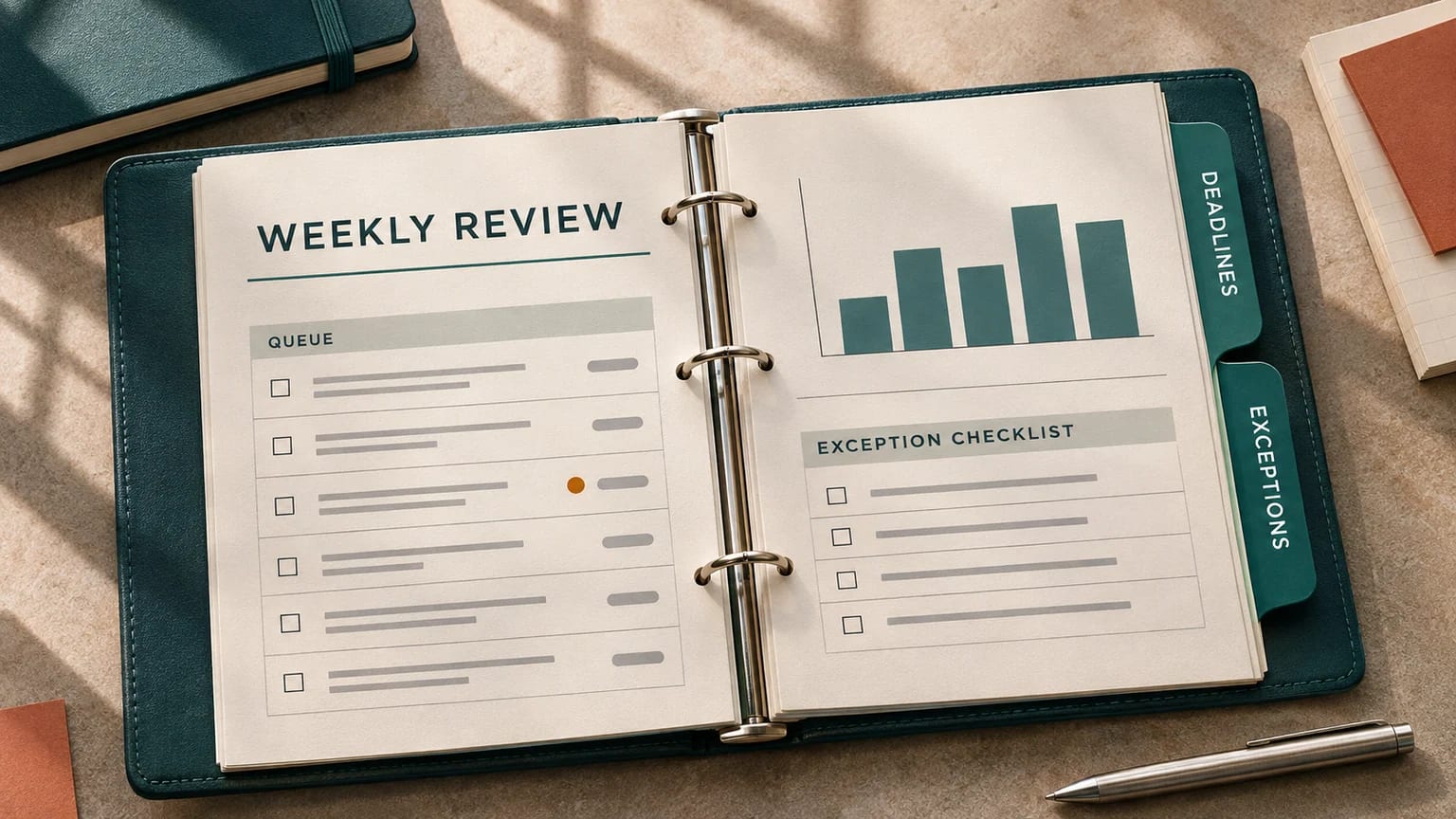
A weekend authorization handoff is complete when the receiving person can explain the current state, the next action, the relevant clock, the evidence location, and the escalation route—and accepts responsibility for the work. Sending a spreadsheet link is only one event in that transfer. Use the free template to make acceptance explicit before the weekday owner leaves, with a fallback if the intended backup is unavailable.
The sample below concerns payer operations, not a substitute for a clinical handoff or an on-call clinical plan. All names, counts, and times are fictional internal examples. Actual response requirements, business-day definitions, coverage arrangements, and urgency criteria must be verified for the applicable payer and service. Keep patient-specific information in approved systems; the downloadable template contains process-level fields only.
Key takeaways
The short version
- Name the receiving person and require acceptance.
- Separate an external requirement from an internal check time.
- Show what is confirmed, what is expected, and what is unknown.
- Define the contingency for no response, an outage, or an unavailable owner.
- Reconcile weekend events on return instead of creating competing case histories.
Take the template with you
Free to copy · no email required
Weekend authorization handoff
Copy-ready process template. Use secure internal references instead of adding patient details to a public tool.
Saves as weekend-authorization-handoff.txt
Try the workflow · fictional demo case
Would the backup know what to do at 9 a.m.?
At a fictional Friday handoff, a renewal is marked submitted. The expected weekend owner has access to the sheet, but has not accepted the case and cannot find a receipt.
Select a check to reveal the finding and next action. Nothing is sent to a payer.
0 of 3 checks reviewed. A named person still approves the next action.
This fictional example illustrates an offered Marsa workflow. We do not connect this public example to a payer or present it as a customer result. We measure demo starts and completions using fixed labels; no input text is collected.
Explore authorization, appeals, benefits, claims, audit, and coordination automations1. Select the work that actually needs coverage
Start with open payer work that could require action while the primary owner is unavailable. Include requests awaiting an expected response, renewals with a verified requirement in the coverage period, unresolved submission acknowledgments, and information requests with an assigned response action. Do not hand over the entire archive simply because it is easy to export. A focused list lets the receiving owner understand the work rather than search for the few cases that matter.
Separate operational coverage from clinical responsibility. The authorization handoff may identify that a clinical reviewer must be contacted through an approved route, but it does not transfer clinical decision-making to an operations coordinator. Define the roles and escalation boundary in advance. If a situation could affect continuity of care or another time-sensitive clinical issue, use the organization's designated clinical process alongside the payer-work handoff.
Keep an explicit exclusion list when it prevents confusion. A case may already be closed with verified evidence, assigned to another approved coverage arrangement, or awaiting an event outside the weekend period. The purpose is to explain why the receiver is responsible for some work and not for all work. A clear boundary prevents duplicated calls and ensures that staff do not assume an unlisted case has quietly changed ownership.
2. Describe the last established state
For each selected case, record the last verified event and its evidence reference. Prepared, attempted, transmitted, acknowledged, awaiting information, and decided should have distinct meanings in your workflow. A short state label is useful when it points to the evidence. It is weak when approved, submitted, or pending means something different to every department. The receiver should know what fact has been established and what still requires verification.
Do not fill missing history with a reassuring summary. If there is no receipt, say acknowledgment unverified and assign the check. If the decision was described verbally but the written source is not located, preserve that distinction. If a balance was last reconciled earlier in the week, show the checked date. A backup can act on a clear uncertainty; an unsupported statement that everything is fine can conceal the next action.
Give the receiver a secure evidence path that works under their own authorized access. A document stored in the absent owner's personal drive may be effectively unavailable even when the handoff contains a link. Test access before the primary owner leaves. Do not solve an access gap by sharing credentials or moving records into an unapproved channel. The handoff should work within the organization's existing access and privacy controls.
3. Put a source beside the clock
Record the external requirement, the event that triggers it, the relevant day basis or time zone where material, and the source. Keep the team's next-check time in a separate field. A Saturday morning check can be a sensible internal target for an example without being a payer deadline. The receiver must be able to tell which date is a requirement and which date is operating margin.
Check how the applicable process treats weekends and holidays rather than assuming a universal rule. A saved business-day label may still leave questions about the triggering event, receipt, or a particular holiday. If the interpretation is unresolved, assign a qualified reviewer and record the open question. Do not let the weekday owner's familiar practice become an undocumented rule that the weekend owner is expected to defend.
CMS's prior-authorization process rules apply to specified impacted payers and have phased implementation. They do not create one weekend timetable for every payer, product, and service. The matrix should point to the applicable source, while the case retains its own relevant facts and history. This separation helps the receiving person verify the rule without mistaking a generic educational example for an instruction governing the actual case.
4. Write the next action as an observable step
Replace follow up with an action that has a question and expected evidence. For example: check the approved portal for acknowledgment of the retained request version, record the reference if present, and use the verified escalation route if it remains absent. The receiver can tell whether that happened. A vague instruction produces activity without establishing which uncertainty the contact was supposed to resolve.
State what the owner may do independently and what needs named approval. The operating owner may gather a status, locate a receipt, or prepare a draft under your process. A submission, a disputed interpretation, or another decision may require the designated reviewer. The handoff should identify that checkpoint and a reachable fallback. It should not leave the receiver deciding whether urgency permits them to cross an authority boundary.
Include the expected result and the branch if it does not occur. If acknowledgment appears, update the state and next expected event. If a new information request arrives, record it and route the evidence items to their owners. If no response appears, follow the approved escalation plan. These branches should be specific enough for the workflow, while leaving clinical, coding, legal, and coverage judgments with the appropriately authorized people.
5. Use a short read-back to transfer responsibility
AHRQ's TeamSTEPPS handoff guidance emphasizes a clear transfer and an opportunity for the receiver to review and ask questions. For payer operations, adapt that principle into a brief read-back: I own this next action, the verified requirement is here, my internal check is at this time, and this is the escalation route. The sender confirms or corrects the summary before leaving. This is an operational adaptation, not a claim that an educational template replaces clinical handoff requirements.
Record acceptance and availability. A person can have access to the system and still be off duty, overloaded, or outside the required role. The receiving owner should accept the specific work and know who provides backup. If they cannot accept it, the sender uses the designated fallback while coverage can still be arranged. A message sent late Friday to a general inbox is not evidence that anyone accepted the responsibility.
Use the read-back to uncover ambiguity, not to perform a ceremonial sign-off. Ask the receiver where they would find the evidence, which uncertainty remains, and what they would do if the expected event does not happen. If the answer requires the sender's memory, improve the written handoff. The exercise works when it reveals a weak instruction before the absence begins.
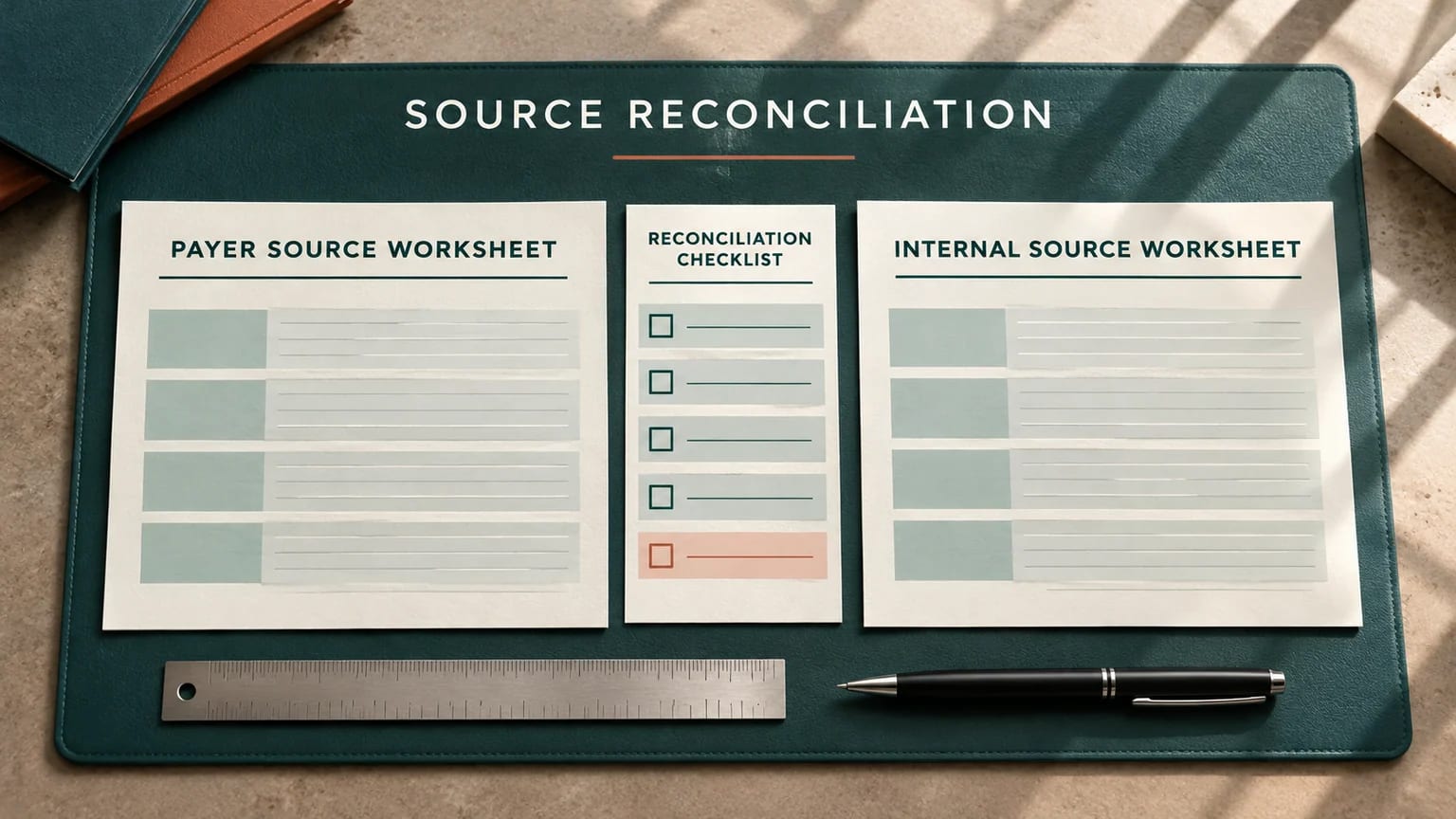
6. Walk through a fictional Friday handoff
At 4:30 p.m. in a fictional example, the primary coordinator has three open renewal cases selected for coverage. One has a verified acknowledgment and an expected response check. One has an attempted upload without a receipt. One has a new request for information awaiting a clinical owner's response. The example time is an internal scenario detail, not a recommended cutoff or payer requirement.
The receiving owner reads back a different next action for each case. For the acknowledged request, check the expected response and retain the result. For the attempted upload, verify receipt and follow the approved contingency route if necessary. For the information request, confirm the evidence owner's acceptance and preserve the response map. All three require sourced deadline status and secure evidence references, but they should not share a generic call payer instruction.
The named reviewer remains responsible for approving any submission under the organization's process. The coverage note identifies how to reach that reviewer and the fallback if unavailable. The receiver accepts the handoff and records the next check points. On return, the original owner will reconcile the weekend events from the shared timeline rather than creating a separate version of the case from messages and memory.
| Fictional state | Weekend next action | Evidence of progress |
|---|---|---|
| Acknowledged, response awaited | Check expected response through approved channel | Retained response and updated next event |
| Upload attempted, receipt absent | Verify acknowledgment; use approved contingency if needed | Receipt reference or documented escalation |
| Information requested | Confirm evidence-owner acceptance and response plan | Updated item map and named review checkpoint |
7. Define the three failures before they happen
The first failure is no response. State the next check, the verified contact route, and when the issue moves to the designated escalation owner. Do not promise that a payer will respond by an invented time. The plan should explain the organization's action under uncertainty and identify the qualified reviewer for any question about deadlines, rights, or continuity of care.
The second failure is a portal or channel disruption. Preserve the attempt evidence, distinguish attempted transmission from acknowledgment, and verify any alternate channel for the exact work. A service outage does not automatically suspend a requirement. When the channel returns, reconcile receipts before resubmitting. The weekend owner should know where the approved contingency guidance lives rather than search old messages for a saved fax number.
The third failure is an unavailable receiving owner or reviewer. Name the backup and the acceptance process, including how the handoff is documented if responsibility changes again. A cascading absence should not create a series of forwarded messages with no final owner. Keep the current accepted owner visible, along with the next action and any decision that still needs approval.
8. Reconcile the timeline when the primary owner returns
The return handoff starts with events that changed the case: acknowledgment, request for information, decision, failed attempt, clarification, or escalation. The weekend owner points to the retained evidence and states what remains open. The primary owner accepts the next action. This avoids the common problem where both people believe the other is still watching for the next response.
Check quantity balances, decision amendments, and dependent notifications where relevant. A weekend authorization change may need to reach billing or scheduling through the approved workflow. Do not assume that a portal update automatically notified everyone who relies on the record. Identify the recipient and acknowledgment for the dependent handoff. Preserve the earlier decision history rather than replacing it with a new status that hides what changed.
Close the coverage period separately from the underlying case. A weekend assignment can end while the payer work remains open with a weekday owner. Record that transfer and the current next action. A coverage-complete flag should not be read as an authorization approval, a resolved appeal, or a payment outcome. Clear labels prevent a scheduling convenience from becoming a misleading operating report.
9. Test the handoff, then keep it small
Finish the rehearsal with a read-back from the receiving owner. Ask them to name the next action, the evidence they would consult, and the person who can approve a change. Record any correction in the handoff itself so the next backup receives the improved version. A successful verbal explanation is useful feedback; it is not a substitute for a written instruction that survives the conversation.
Run a synthetic rehearsal with an ambiguous submitted status, an unavailable owner, and a late information request. Ask the backup to locate the source, explain the clock, state the next action, and identify the approval boundary. Record the parts that needed verbal explanation. Revise those fields before adding more detail. A long handoff that nobody can scan under pressure can be less useful than a short one with dependable references.
Measure accepted handoffs, unresolved ownership gaps, missing evidence references, and return reconciliations with denominators. A sent-message count does not measure transfer quality. Inspect a small sample to see whether the receiving owner could act without reconstructing the case. Keep clinical and financial outcome claims separate; the handoff is one operating control among many factors that affect authorization and payment results.
Marsa Health's governed case model connects ownership, readiness checks, evidence, next action, and timeline, with named human approval before payer submission. The free template and fictional demo show the operating boundary before any contact request. You can use them in your own approved workflow. For a structure review, share headers and process descriptions only; keep patient information and working case records in approved systems.
Common questions
Answers before you build.
Is a shared spreadsheet link enough for a weekend handoff?
The receiving person also needs access, a clear current state, next action, clock source, escalation route, and explicit acceptance of responsibility.
Do authorization clocks stop on weekends?
Verify the applicable process. Do not assume a universal weekend or holiday rule, and distinguish external requirements from internal working targets.
Does this replace a clinical handoff?
No. It structures payer-operations work. Clinical responsibility and escalation follow your organization's separate approved clinical process.
Practical closeout
Use this operator checklist.
- Name the receiving person and require acceptance.
- Separate an external requirement from an internal check time.
- Show what is confirmed, what is expected, and what is unknown.
- Define the contingency for no response, an outage, or an unavailable owner.
- Reconcile weekend events on return instead of creating competing case histories.
Continue through the cluster
Verified customer case studies are added only with customer permission and supporting evidence; none is implied by these operational examples.
Sources & methodology
Trace the operational claims.
Marsa Health Editorial reviewed the primary and research sources below on November 4, 2026. We translate them into workflow controls, distinguish proposals from final rules, and flag where plan, program, state, contract, or clinical requirements vary.
- 01TeamSTEPPS Tool: Handoff Agency for Healthcare Research and QualityPrimary communication background on transfer, review, and questions. The payer-operations template is an original adaptation.Accessed or rechecked November 4, 2026
- 02CMS Interoperability and Prior Authorization Final Rule CMSScope and implementation context; verify the actual arrangement rather than assuming universal weekend rules.Accessed or rechecked November 4, 2026
- 03Electronic Prior Authorization Centers for Medicare & Medicaid ServicesCurrent CMS provider-readiness guidance for 2027 electronic prior authorization, EHR questions, FHIR testing, and workflow preparation.Accessed or rechecked November 4, 2026
- 04Minimum Necessary Requirement U.S. Department of Health and Human ServicesHIPAA guidance on limiting uses, disclosures, and requests for protected health information when the standard applies.Accessed or rechecked November 4, 2026
Organizational author. Editorial review covers source accuracy, search intent, workflow boundaries, and human-oversight requirements. This material is educational and does not provide clinical, legal, coding, or coverage advice.
No named clinical or legal expert reviewer is attributed to this version. Marsa Health does not invent reviewer credentials.
Read our editorial methodRevision history
What changed and when
November 4, 2026
Initial publication, source review, and operational editing.