
The authorization was approved. Why is the behavioral-health claim still unpaid?
Work through the gap between an authorization decision and a payable claim: dates, quantities, provider identity, eligibility, submission evidence, and the right correction route.
Direct answer
Claim denied after prior authorization approval: what operators need to know
Work through the gap between an authorization decision and a payable claim: dates, quantities, provider identity, eligibility, submission evidence, and the right correction route. Read the decision and remittance together; a green status is not enough. Compare dates, quantity basis, identities, location, and payer arrangement.
One denial · Plain read in 2 business days · A de-identified worksheet, not the letter
See the workflow: Prior-authorization workflow.
On this page: Direct answer
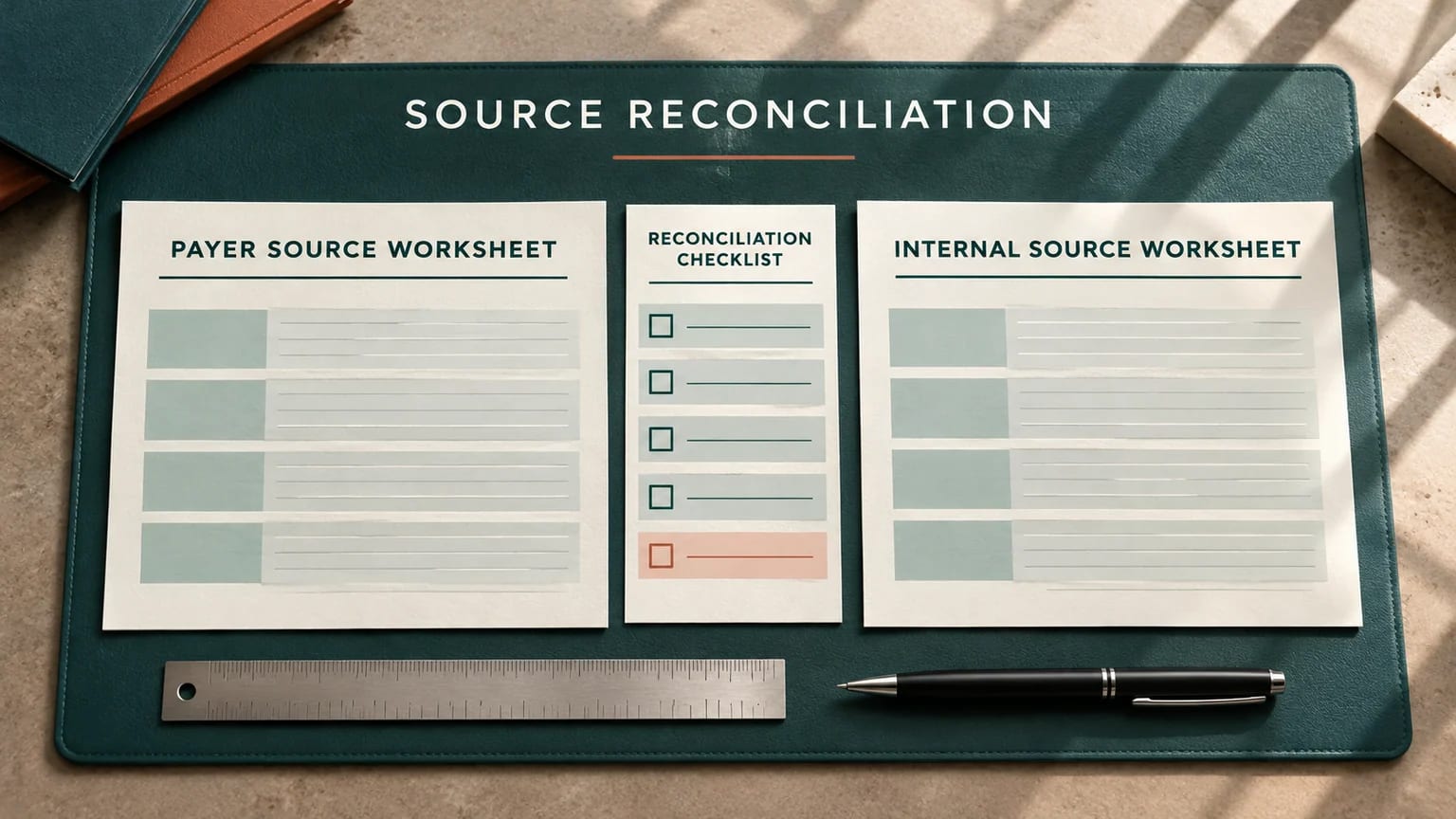
An approved authorization does not, by itself, prove that a later claim satisfies every payment condition. Start by matching the decision to the actual service and claim: the applicable payer arrangement, service dates, authorized quantity, billing and rendering identities, location, and any stated conditions. Then read the complete remittance or rejection response. The next action depends on the mismatch you can establish, not on the word approved in the tracker.
The fastest useful investigation is usually a short reconciliation, not a long appeal letter. This article gives an operations team a way to distinguish missing evidence, a claim error, a payer processing question, and a clinical dispute. The examples are fictional and the workflow is an editorial recommendation. Exact coverage, coding, deadlines, and appeal rights depend on the applicable plan, contract, service, and jurisdiction.
Key takeaways
The short version
- Read the decision and remittance together; a green status is not enough.
- Compare dates, quantity basis, identities, location, and payer arrangement.
- Separate a rejected submission from an adjudicated denial.
- Correct a demonstrated claim error through the applicable route; appeal a disputed decision through the applicable appeal route.
- A named reviewer approves the action and the evidence before submission.
Take the template with you
Free to copy · no email required
Authorization-to-payment mismatch worksheet
A blank investigation structure. Keep all real case information inside your approved systems.
Check,Authorization source,Claim source,Match status,Missing evidence,Owner,Next action,Human review
Applicable payer arrangement,,,Unconfirmed,,,,
Service dates,,,Unconfirmed,,,,
Quantity and quantity basis,,,Unconfirmed,,,,
Provider and location,,,Unconfirmed,,,,
Response reason and route,,,Unconfirmed,,,,
Saves as authorization-payment-mismatch.csv
Try the workflow · fictional demo case
Find the mismatch before writing the appeal
A fictional IOP case is marked approved. The claim response says the authorization information does not support the billed service. Review three controls before choosing a route.
Select a check to reveal the finding and next action. Nothing is sent to a payer.
0 of 3 checks reviewed. A named person still approves the next action.
This fictional example illustrates an offered Marsa workflow. We do not connect this public example to a payer or present it as a customer result. We measure demo starts and completions using fixed labels; no input text is collected.
Explore authorization, appeals, benefits, claims, audit, and coordination automations1. Treat approval and payment as separate decisions
An authorization record answers a defined question about a requested service under a particular arrangement. A claim asks for payment for services reported as delivered. Those records should connect, but they are not interchangeable. A copied approval number can coexist with a wrong date range, an unsupported quantity, or an identity mismatch. The investigation starts by stating what the authorization actually approved, using the decision record rather than a status copied into a spreadsheet.
Write a one-sentence problem statement that somebody else can verify: the claim response states that the authorization does not match the billed service, while the retained decision appears to cover the same service category. That is more useful than payer denied an approved case. The first statement names the evidence conflict. The second blends the team's conclusion with the issue being investigated and can push the reviewer toward an appeal before the facts are compared.
Keep the question narrow enough to answer. Was the decision linked to the intended payer product? Did the service occur inside the approved range? Does the claim use the relevant provider and location information? Which reason and remark codes appear on the response? A short evidence checklist protects staff time by preventing a general argument about authorization from replacing a specific explanation of the unpaid line.
2. Establish what response you are actually reading
Start with the complete response, including line-level information and any accompanying remarks. A clearinghouse acceptance, a payer acknowledgment, a request for information, a remittance, and a portal status can represent different points in the process. An accepted electronic submission does not establish that the claim was paid. A portal label may omit the detail needed to decide whether to correct a field, supply evidence, request reconsideration, or appeal.
CMS describes the electronic remittance advice as the transaction explaining payment and adjustments. Read group codes, claim adjustment reason codes, and remittance advice remark codes together when they are present. Do not turn a code lookup into a determination of patient responsibility. The applicable contract, benefit terms, payer instructions, and circumstances still matter. A code definition can orient the investigation; it cannot replace the actual response and supporting records.
If the submission was rejected before adjudication, record the rejection source and stated correction requirement. If the payer adjudicated and denied the claim, record the denial date, response details, and the applicable review instructions. If you cannot establish which happened, that uncertainty is the next action. Sending a generic appeal to the wrong channel may consume time without resolving the problem or preserving the right deadline.
3. Match the payer arrangement before the authorization number
A familiar insurance brand is not a sufficient match key. Behavioral-health administration can involve a delegated organization, a different network, or a product-specific process. The team should confirm the arrangement that applied to the service and compare it with the arrangement that issued the authorization. Do this within the organization's authorized systems. A public worksheet or website demo should never become a place to collect member identifiers or coverage records.
In a fictional example, admissions records the name printed most prominently on a card, utilization review contacts a behavioral-health administrator, and billing routes the claim according to a saved payer shortcut. Each person may believe they selected the same payer. The reconciliation asks for evidence of the actual arrangement at each step. The goal is to find a routing or identity gap, not to decide that one department must have made a mistake.
When the records disagree, preserve both sources and their checked dates. A later eligibility response may describe current coverage while the question concerns an earlier service. A call reference may establish what was discussed without proving that the representative had the relevant product context. Ask a precise follow-up question and record the answer's scope. Do not overwrite the earlier evidence just because a newer response sounds more confident.
4. Compare the service dates and decision history
Build the smallest timeline needed to explain the issue: request date, acknowledgment, original decision, any extension or amendment, relevant service dates, claim submission, and payer response. Keep event dates distinct from the dates staff entered them. A spreadsheet updated on Tuesday does not prove that the payer accepted a request on Tuesday. The retained acknowledgment or decision is the stronger source for that event.
Suppose a fictional authorization covers a service period through the end of one week, but the claim includes a service in the following week. Before choosing a route, check for a later decision, an amendment, a transcription error, or an uncompleted renewal. Each possibility produces a different next action. Do not change a real service date or represent an unapproved period as approved merely to reconcile the row.
The timeline should also identify uncertainty. If a renewal was attempted during a portal outage, distinguish attempted transmission from acknowledged receipt. If the team received a verbal statement, record that it was verbal and locate any later written decision. A reviewer can evaluate an incomplete record when the gaps are visible. A timeline that silently converts assumptions into events makes an otherwise reasonable investigation difficult to defend.
5. Reconcile units, visits, days, and the remaining balance
A quantity without a basis is not a usable authorization balance. Twelve visits, twelve units, and twelve days can describe different permissions. The team's calculation must use the applicable service definition and decision. It should not assume a universal conversion between a visit and a billing unit. If the payer's written decision is unclear, record the question and obtain clarification through the appropriate channel before treating the number as scheduling or billing permission.
Define what used means in your tracker. Scheduled, delivered, documented, billed, and adjudicated quantities are different states. An operational balance based on delivered services may be useful for renewal preparation, while billing needs to reconcile claim lines against the source records. Combining all those states into a single number makes it hard to explain why two departments disagree even when both are calculating accurately from different inputs.
Record the source and time of the latest balance check. A correct balance from last week can be stale today. When an authorization changes, preserve the old decision and explain how the amendment affects the working balance. The acceptance check is simple: a second authorized reviewer should be able to reproduce the calculation from the retained sources. If that person needs the original owner's memory, the control remains incomplete.
6. Check provider, location, and service identity
Compare the identities and service attributes that are material under the applicable arrangement. Depending on the situation, these may include billing entity, rendering provider, tax identification context, service location, level of care, and reported service information. This is a comparison exercise, not an invitation to edit claim fields until payment occurs. Changes must reflect the actual service and valid reporting requirements, with qualified review when coding or contract interpretation is involved.
A fictional multi-location group illustrates the problem. The authorization workflow uses one site's saved profile, but the service is delivered at another location. The billing team sees an approval number and assumes the location question was settled. The investigation should establish what the decision covered and what the claim reported. If a location change required a separate payer action, the next action is to verify that requirement and review the available remedy.
Make the handoff explicit after the comparison. The reviewer should state whether the records match, which discrepancy is established, which item remains unknown, and who can resolve it. Sending the whole record back with please review often restarts the investigation in another department. A precise question, the supporting evidence reference, and the expected response reduce duplicate work while keeping each person's decision within their role.

7. Choose the route that answers the established problem
A corrected claim can be appropriate when a genuine reporting error has been identified and the applicable payer process calls for that route. An appeal can be appropriate when the organization disputes an adverse decision and has evidence responsive to it. A missing-information response, reconsideration, or processing inquiry may be a different route again. The labels, sequence, submission requirements, and deadlines vary. Use the actual payer instructions rather than a generic rule from an unrelated plan.
Before submission, write the requested outcome in one sentence. For example: review the retained authorization amendment against the specified unpaid service because the response appears to rely on the earlier decision. Then list the evidence that supports that request. A packet should answer the reason given, not simply contain every document available. Keep patient-specific evidence within approved channels, and do not send records through Marsa's public contact form or educational tools.
A named human approves the route, factual statements, deadline, recipient, and evidence set. If the investigation reveals a legal, contractual, coding, or clinical question outside the reviewer's authority, escalate it. The approval checkpoint is especially useful when an AI tool helps summarize the history or draft a response. The draft must not invent a policy citation, imply that approval guarantees payment, or present an uncertain event as a documented fact.
8. Turn the finding into a control your next case can use
Once the immediate action is approved, record the failure mode at a process level. Was the quantity basis missing? Did the authorization amendment fail to reach billing? Was an attempted upload marked submitted? Did a payer shortcut hide the product distinction? A useful finding identifies the decision that lacked reliable information. It does not stop at staff need more training, and it does not assume that buying software will resolve an undefined rule.
Assign one owner to the smallest corrective change. Add a required receipt reference before a submission state becomes acknowledged. Require a quantity basis beside every authorized quantity. Create an accepted handoff when a decision changes. Test the change on synthetic examples before revising the live workflow. Keep the previous definition in the change log so later reports can distinguish an operating improvement from a change in how the team labels work.
Measure the control directly at first: the share of relevant cases with a sourced quantity definition, the count of changes awaiting billing acknowledgment, or the share of submitted requests with retained receipts. Payment outcomes can be monitored as well, but they are affected by volume, mix, posting delays, and payer behavior. A reduction after a change is an association unless the evaluation supports a stronger conclusion. Avoid presenting a few resolved cases as a guaranteed recovery rate.
Close the investigation with evidence, not a portal label
Define what closes the case before the team submits its response. A payer acknowledgment confirms receipt; it does not establish a favorable decision. A favorable decision may still require the payment record to be reconciled. Record the actual outcome, the date, and the evidence reference. If the payer requests more information, keep the case open with a new next action rather than treating transmission as completion.
Retain a short explanation of what the investigation established and what remained unresolved. A corrected identity field, a located amendment, and an overturned clinical decision are different outcomes. Keeping those distinctions makes the next process review useful and prevents a collection of unrelated resolutions from becoming a misleading success rate.
9. See the governed workflow before asking for help
The fictional demo on this page shows the sequence: inspect the mismatch, reveal the missing evidence, and prepare a next action for named human review. It does not connect to a payer, process a real claim, or determine coverage. You can download the blank worksheet and use the method with your own approved systems. That should provide value even if you never request a call.
Marsa Health is designed around a case with an owner, readiness checks, an amount at risk where appropriate, a next action, and a timeline. The product boundary is human approval before anything goes to a payer. If your team wants a second look at the structure of its tracker, the free payer-fit check uses headers and checklist steps only. For a patient-specific dispute, follow your organization's approved clinical, billing, compliance, and legal review process.
Common questions
Answers before you build.
Does an authorization guarantee payment?
Do not treat approval alone as proof of payment. Compare the actual decision, service, claim, eligibility context, and applicable payment requirements.
Should we appeal every claim denied after approval?
First establish the response type and the specific mismatch. A correction, information response, processing inquiry, reconsideration, or appeal may be appropriate under the applicable process.
Can we send Marsa the denial letter?
Do not send patient records or denial letters through public forms or email. Public offers use process descriptions or a de-identified worksheet as instructed.
Practical closeout
Use this operator checklist.
- Read the decision and remittance together; a green status is not enough.
- Compare dates, quantity basis, identities, location, and payer arrangement.
- Separate a rejected submission from an adjudicated denial.
- Correct a demonstrated claim error through the applicable route; appeal a disputed decision through the applicable appeal route.
- A named reviewer approves the action and the evidence before submission.
Continue through the cluster
Verified customer case studies are added only with customer permission and supporting evidence; none is implied by these operational examples.
Sources & methodology
Trace the operational claims.
Marsa Health Editorial reviewed the primary and research sources below on November 4, 2026. We translate them into workflow controls, distinguish proposals from final rules, and flag where plan, program, state, contract, or clinical requirements vary.
- 01Health care payment and remittance advice CMSPrimary background on electronic remittance advice. The investigation sequence and examples are Marsa editorial recommendations.Accessed or rechecked November 4, 2026
- 02Health care payment, remittance advice and electronic funds transfer CMSBackground on standardized remittance adjustment information; individual code lookup does not establish coverage or liability.Accessed or rechecked November 4, 2026
- 03Reduce claim returns and rework UnitedHealthcarePayer-specific submission guidance. Check the applicable product and contract; do not generalize one payer's route or deadline.Accessed or rechecked November 4, 2026
- 04How to appeal an insurance company decision Centers for Medicare & Medicaid ServicesFederal overview of internal appeals, external review, notices, and general appeal timing. Plan and state rules can differ.Accessed or rechecked November 4, 2026
- 05External Appeals Centers for Medicare & Medicaid ServicesFederal external-review process and consumer protections.Accessed or rechecked November 4, 2026
- 06CMS Interoperability and Prior Authorization Final Rule CMS-0057-F Centers for Medicare & Medicaid ServicesCurrent implementation dates, decision timeframes, denial-reason requirements, metrics, and API provisions for impacted payers.Accessed or rechecked November 4, 2026
Organizational author. Editorial review covers source accuracy, search intent, workflow boundaries, and human-oversight requirements. This material is educational and does not provide clinical, legal, coding, or coverage advice.
No named clinical or legal expert reviewer is attributed to this version. Marsa Health does not invent reviewer credentials.
Read our editorial methodRevision history
What changed and when
November 4, 2026
Initial publication, source review, and operational editing.